|
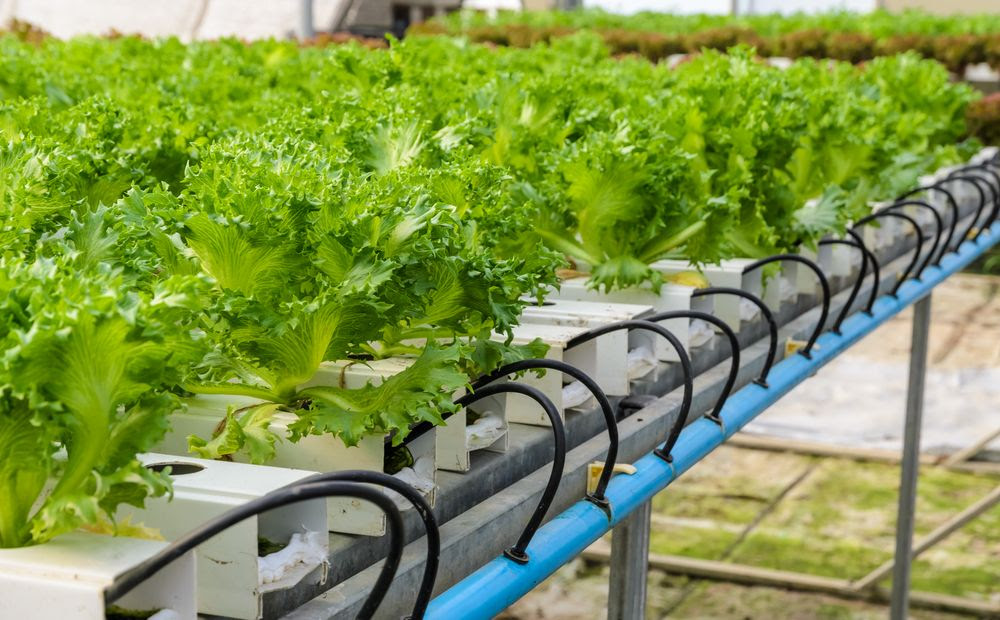
Port of Spain, Trinidad and Tobago, December 12, 2019 (IICA). The Inter-American Institute for Cooperation on Agriculture (IICA) Delegation in Trinidad and Tobago selected the Matelot Community College as the pilot site to demonstrate a climate-smart food production system, which can be scalable, coupled with training farmers and youth and in the use of 3D modeling and design of climate smart farms. The agricultural science students will be using this climate smart system as part of their School Based Assessment (SBA), to compare the growth rate of lettuce in the system using various potting media versus the traditional open field. IICA used the “adopt a village” approach to provide the necessary interventions for this highly vulnerable community with hilly topography that leads easily to landslides during the rainy season, which sometimes blocks the only access road, leaving the 500 people totally isolated and locked off from the rest of Trinidad. During storm surges, the village is inundated with sea water which compromises the nearby Matelot Community College agriculture lands. The farming population is also aging and declining and the young men and women in the community are not readily attracted to agriculture as an economic and sustainable business. As part of the project, IICA is developing a community profile and vulnerability risk assessment of the Matelot Community to identify other critical gaps and interventions that will address these limitations. Training of 10 farmers, 5 teachers, and 17 students in 3D modeling using an open software SketchUp was also done during 2019. IICA’s technicians visited farms and conduct a farm risk profile, analyzing the weaknesses of each farmer to climate change and recommend solutions. The construction of the demonstration climate smart food production system was a collaboration between IICA and Garden Pool, a non-for profit organization based in Mesa, Arizona USA. The system was established in June 2019 and being operationalized in September 2019, which coincides with the start of the new school term. In an effort to ensure the sustainability, expansion and scalability nationally and regionally of this initiative, IICA will broker both the private and public sector investors to attain external resources. The funds provided by IICA will be used as seed money to demonstrate its commitment to building resilience in vulnerable communities, which will lead to strengthened resilience at a national and regional scale. The Matelot project will spearhead change in the farming methods of older farmers in the community in order to build resilience to climate change. |
| About IICAIICA is the specialized agency for agriculture in the Inter-American system, with a mission to encourage, promote and support its 34 Member States in their efforts to achieve agricultural development and rural well-being through international technical cooperation of excellence. |
| More information: Richard Rampersaud, Agribusiness and Value Chain specialist at IICArichard.rampersaud@iica.int |
Saturday, July 18

Trending
- Police Officers receive training on Digital Framework for Diversionary Caution System
- Saint Kitts and Nevis Advances Strategic Dialogue with Diaspora on Sustainable Development and National Priorities in New York
- SAINT KITTS AND NEVIS ENLISTS REGIONAL EXPERT TO BUILD MEDICINAL CANNABIS BANKING FRAMEWORK
- PRIME MINISTER DREW SAYS THE SUSTAINABLE ISLAND STATE AGENDA POSITIONS SAINT KITTS AND NEVIS FOR A STRONGER, MORE RESILIENT FUTURE
- OECS Airline Proposal Advances as Region Seeks to Restore Post-COVID Connectivity Levels
- “St. Kitts and Nevis Will Not Be Exposed To Criminals” – Prime Minister Drew
- MINISTRY OF SPORTS REAFFIRMS PUBLIC ACCESS TO KIM COLLINS STADIUM UNDER STRUCTURED APPLICATION PROCESS
- Government of St Kitts and Nevis Presents Second Voluntary National Review and Delivers National Statement in Plenary Debate at the High-Level Political Forum on Sustainable Development at the United Nations